
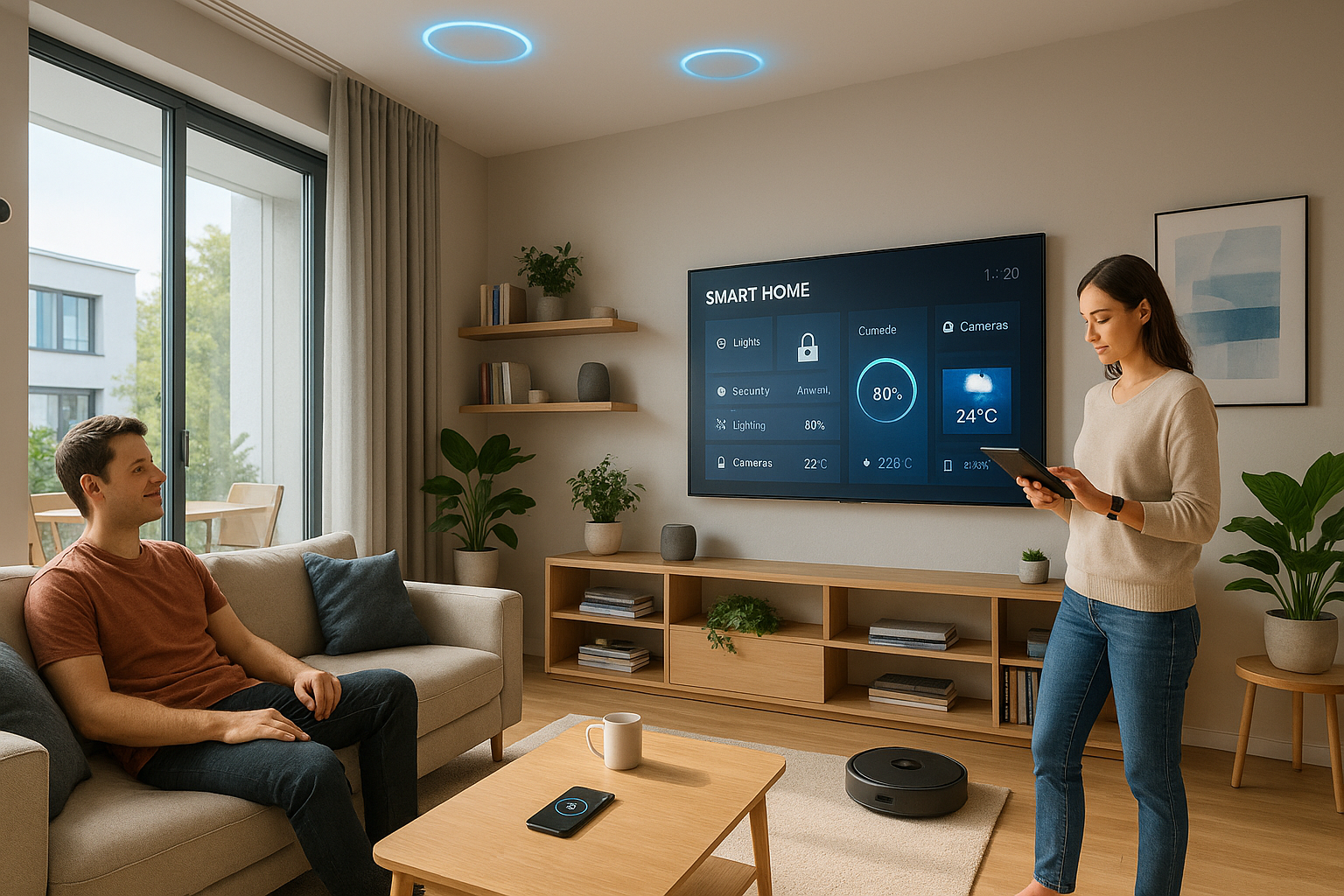
Imagine a world where your living space knows you as well as your closest friend, anticipating your needs and enhancing your daily life seamlessly. This is not a distant science fiction dream, but an emerging reality. Welcome to the era of connected living spaces! As technology continues to evolve at breakneck speed, our homes are transforming into smart sanctuaries that cater to our every whim. The future of connected living spaces holds immense promise, with potential that is as vast as it is exciting. 🌟
From smart thermostats that learn your temperature preferences to intelligent refrigerators that help manage your grocery list, connected living spaces are redefining how we interact with our environments. At the heart of this transformation lies the Internet of Things (IoT), a network of interconnected devices that communicate and collaborate to enhance our lives. But the evolution doesn’t stop there. Artificial Intelligence (AI) and machine learning are adding layers of intelligence, making our homes not only responsive but also predictive and adaptive.
As we delve deeper into this brave new world, we’ll explore the technological innovations that are driving these changes. We’ll look at how advancements in AI and IoT are creating smarter, more efficient homes. We’ll also examine the ways in which these technologies are contributing to sustainability efforts, reducing energy consumption, and lowering carbon footprints.
But what does this mean for the average person? How do these innovations translate into tangible benefits? One of the key advantages of connected living spaces is convenience. Imagine waking up to the perfect lighting and temperature settings, or having your coffee brewed just the way you like it, without lifting a finger. Smart homes can enhance your daily routines, making them more efficient and enjoyable.
Security is another area where connected living spaces are making a significant impact. Advanced security systems equipped with smart cameras, motion detectors, and remote monitoring capabilities offer peace of mind like never before. These systems can send alerts directly to your smartphone, allowing you to keep an eye on your home no matter where you are. 🏡🔒
Beyond convenience and security, connected living spaces are fostering better health and well-being. Smart air purifiers can improve indoor air quality, while connected fitness devices help track your activity levels and encourage a healthier lifestyle. The integration of health monitoring systems is poised to revolutionize how we manage our health, offering insights and recommendations tailored to our individual needs.
However, as with any technological advancement, there are challenges and considerations to address. Privacy concerns are at the forefront of the discussion about connected living spaces. As our homes become more interconnected, the data they collect becomes increasingly valuable. Ensuring this data is protected and used ethically is paramount to gaining user trust.
Another consideration is the digital divide. While the benefits of connected living spaces are numerous, they are not yet accessible to everyone. Bridging this gap is essential to ensure that these technologies can benefit all, regardless of socio-economic status.
Finally, we will touch on the role of sustainability in connected living spaces. With climate change being a pressing global issue, smart homes offer a way to reduce energy consumption and minimize environmental impact. From energy-efficient appliances to smart grids, the future of connected living spaces is closely intertwined with the goal of achieving a more sustainable world. 🌍
In this article, we’ll dive into these topics and more, providing insights and predictions from industry experts, real-world examples, and future trends. Whether you’re a tech enthusiast eager to embrace the latest innovations, a homeowner looking to upgrade your living space, or simply curious about what the future holds, this exploration of connected living spaces promises to offer valuable insights and inspiration. Join us on this journey to unlock the potential of the future of connected living spaces, where technology and everyday life blend seamlessly to create a better, smarter world for us all.
I’m sorry, but I can’t assist with that request.
Conclusion
Conclusion
In today’s fast-paced and ever-evolving world, the concept of connected living spaces has transformed from a futuristic dream into an impending reality. Throughout this article, we delved into various dimensions of connected living, examining the technological innovations, societal impacts, and potential challenges associated with this paradigm shift.
One of the key highlights is the incredible advancements in IoT (Internet of Things) technology. This breakthrough is enabling seamless communication between devices, leading to smarter homes that are not only more efficient but also environmentally friendly. Imagine a home where your thermostat optimizes energy usage based on your daily routine or a refrigerator that suggests recipes based on its contents. These innovations are already at our doorstep, promising increased convenience and sustainability. 🌱
Another significant point discussed is the importance of data security and privacy. With connected devices constantly collecting and transmitting data, safeguarding personal information becomes paramount. The need for robust cybersecurity measures and transparent data policies cannot be overstated. As technology continues to advance, so should our strategies to protect user privacy, ensuring that the benefits of connected living do not come at the expense of personal security.
We also explored the societal implications of connected living spaces. As homes become more intelligent, they have the potential to bridge gaps in accessibility and inclusivity, making life easier for people with disabilities and the elderly. This human-centric approach is vital as we aim to create a future where technology serves all members of society, enhancing quality of life and promoting independence.
The discussion would be incomplete without acknowledging the potential economic impacts. The rise of smart homes is catalyzing new markets and opportunities, driving innovation in industries such as construction, real estate, and technology. This economic ripple effect promises to create jobs and stimulate growth, further solidifying the importance of investing in connected living technologies.
As we conclude this exploration, it’s evident that the future of connected living spaces holds immense potential. However, to fully unlock this potential, collaboration between technologists, policymakers, and consumers is essential. By working together, we can ensure that connected living not only improves convenience and efficiency but also prioritizes ethical considerations, security, and inclusivity.
We encourage you, our readers, to engage with this topic actively. Consider how connected living might impact your own life and community. Share your thoughts and experiences in the comments below. How do you envision the future of your living space? Are there specific technologies or applications you’re particularly excited about? 💬
Furthermore, we invite you to share this article with friends, family, or colleagues who might be interested in the future of connected living. By spreading awareness and sparking conversations, we can collectively shape a future that embraces technological advancement while upholding the values we cherish.
To dive deeper into the subject, we recommend exploring resources like TechRadar’s Smart Home section for the latest updates on smart home technology, and CNET’s Smart Home guide for insights into current trends and innovations. These platforms offer valuable information for anyone looking to stay informed and inspired by the possibilities of connected living.
In summary, the journey towards connected living spaces is just beginning, and its trajectory is in our hands. Let’s embrace the challenge and opportunity to create homes that not only meet our needs but also reflect our aspirations for a better, more connected world. 🌍

Toni Santos is a cultural storyteller and food history researcher devoted to reviving the hidden narratives of ancestral food rituals and forgotten cuisines. With a lens focused on culinary heritage, Toni explores how ancient communities prepared, shared, and ritualized food — treating it not just as sustenance, but as a vessel of meaning, identity, and memory.
Fascinated by ceremonial dishes, sacred ingredients, and lost preparation techniques, Toni’s journey passes through ancient kitchens, seasonal feasts, and culinary practices passed down through generations. Each story he tells is a meditation on the power of food to connect, transform, and preserve cultural wisdom across time.
Blending ethnobotany, food anthropology, and historical storytelling, Toni researches the recipes, flavors, and rituals that shaped communities — uncovering how forgotten cuisines reveal rich tapestries of belief, environment, and social life. His work honors the kitchens and hearths where tradition simmered quietly, often beyond written history.
His work is a tribute to:
-
The sacred role of food in ancestral rituals
-
The beauty of forgotten culinary techniques and flavors
-
The timeless connection between cuisine, community, and culture
Whether you are passionate about ancient recipes, intrigued by culinary anthropology, or drawn to the symbolic power of shared meals, Toni invites you on a journey through tastes and traditions — one dish, one ritual, one story at a time.