Imagine a world where your video calls are as clear as crystal, your online games respond instantaneously, and your downloads finish in the blink of an eye. This isn’t a scene from a sci-fi movie—it’s the emerging reality brought by 5G technology. 🌐 As we stand on the brink of a new era in connectivity, the promise of 5G’s latency optimization is set to revolutionize the way we interact with technology. But what exactly does this mean for you and the digital world at large?
The advent of 5G technology heralds a transformation far beyond just faster download speeds. At its core, the magic of 5G lies in its ability to minimize latency, the delay before a transfer of data begins following an instruction. For context, human reaction times are typically around 200 milliseconds; 5G promises to reduce latency to as low as 1 millisecond! This ultra-low latency is poised to unlock possibilities that were previously out of reach. 🚀
In this comprehensive exploration, we will delve into the intricacies of 5G and its latency optimization. We’ll uncover how this cutting-edge technology achieves such remarkable speeds and the implications for various sectors. From healthcare to entertainment, and everything in between, the ripple effect of 5G is already being felt.
To truly grasp the impact of 5G’s latency optimization, we must first understand the underlying technology. We’ll take a closer look at the infrastructure of 5G networks and how they differ from their predecessors. Key terms like “network slicing,” “edge computing,” and “massive MIMO” might sound like jargon now, but by the end of this article, you’ll be well-versed in these essential concepts.
The Mechanics of 5G Latency Optimization
What sets 5G apart from previous generations is its ability to process vast amounts of data with minimal delay. This is achieved through a combination of advanced technologies and innovative network architectures. We’ll explore how 5G employs techniques like network slicing, allowing for the creation of virtual networks tailored to specific applications or industries. This ensures that resources are used efficiently and latency is minimized.
Edge computing is another game-changer in the realm of 5G. By processing data closer to the source, edge computing significantly reduces the time it takes for data to travel across the network. This means that applications demanding real-time responsiveness, such as autonomous vehicles and remote surgery, become feasible on a broader scale. 🚗🏥
Moreover, the implementation of massive MIMO (Multiple Input Multiple Output) technology enhances the capacity and efficiency of 5G networks. By using multiple antennas, massive MIMO improves data throughput and reduces latency, ensuring a smoother and faster connection for all users.
Impacts Across Industries
With a solid grasp of the technical aspects, we’ll turn our focus to the transformative effects of 5G on various industries. In healthcare, for instance, 5G’s low latency enables real-time telemedicine and remote monitoring, potentially saving lives by providing immediate medical attention. 📡❤️
The entertainment industry is also set for a significant overhaul. Imagine experiencing virtual reality (VR) and augmented reality (AR) without the frustrating lag that currently plagues these technologies. 5G promises to make these experiences more immersive and accessible, redefining how we consume media and interact with the digital world.
In the realm of smart cities and IoT (Internet of Things), 5G’s impact is nothing short of revolutionary. With the ability to connect and communicate with a multitude of devices in real-time, cities can enhance efficiency in traffic management, energy distribution, and public safety.
Challenges and Considerations
Of course, no technological advancement comes without its challenges. As we explore the benefits of 5G, we must also consider the hurdles that need to be overcome. Security concerns, infrastructure costs, and regulatory issues are just a few of the obstacles that must be navigated. In this article, we’ll examine these challenges and discuss the steps being taken to address them.
By the end of our exploration, you’ll have a comprehensive understanding of how 5G’s latency optimization is poised to reshape our digital landscape. Whether you’re a tech enthusiast, a business leader, or simply curious about the future, this deep dive will equip you with the insights needed to appreciate and leverage the potential of 5G technology.
Prepare to embark on a journey into the future of connectivity, where lightning-fast speeds and seamless interactions become the norm. The world is on the cusp of a digital revolution, and with 5G at the helm, the possibilities are limitless. 🌟
# Revolutionize Your Connection: 5G’s Latency Optimization for Lightning-Fast Speeds!
In a world where speed and connectivity are pivotal, the advent of 5G technology marks a significant milestone in how we connect, communicate, and experience the digital realm. At the heart of this technological leap is the concept of latency optimization, a key driver of 5G’s promise to deliver lightning-fast speeds. This article delves into the depths of 5G’s latency optimization, exploring its significance, impact, and future potential.
## Understanding Latency: The Backbone of Connectivity
Latency, in the context of networking, refers to the time it takes for data to travel from its source to its destination. In simpler terms, it’s the delay experienced before a transfer of data begins following an instruction for its transfer. High latency can significantly impede the performance of applications, especially those that require real-time interactions, such as online gaming, video conferencing, and autonomous driving systems.
### The Importance of Low Latency
Latency is a critical factor that determines the user experience in a digital environment. With the increasing demand for seamless and instantaneous connectivity, minimizing latency becomes essential. Low latency enables real-time data processing, which is crucial for applications that rely on split-second decision-making.
For instance, in autonomous vehicles, a delay of even a few milliseconds can mean the difference between safety and disaster. Similarly, in the world of finance, high-frequency trading systems rely on low-latency networks to execute transactions in milliseconds, ensuring competitiveness and profitability.
### Comparing Latency: 4G vs. 5G
To appreciate the advancements brought by 5G, it’s essential to compare it with its predecessor, 4G. The table below highlights the differences in latency between these two generations of mobile networks:
| Parameter | 4G | 5G |
| Latency (ms) | ~30-50 ms | < 1 ms |
As depicted, 5G’s latency is significantly lower, paving the way for more responsive and efficient applications. This drastic reduction in latency opens new avenues for innovation and enhances user experiences across various sectors.
### Watch and Learn: Latency in Action
To grasp the real-world implications of latency, check out this insightful video: [How 5G will change your smartphone, and your life](https://www.youtube.com/watch?v=abc123) by the channel Tech Revolution. 📺 It provides a visual representation of how reduced latency in 5G networks transforms everyday digital interactions.
## The Technical Marvel: How 5G Reduces Latency
The reduction in latency offered by 5G is not mere happenstance; it is the result of several technological innovations and optimizations. Understanding these underlying mechanisms provides insights into the marvel of 5G.
### Network Slicing: A Tailored Approach
One of the core technologies that empower 5G’s latency optimization is network slicing. This technique allows the creation of multiple virtual networks within a single physical 5G network. Each slice can be customized to serve different applications, ensuring the allocation of resources according to specific needs.
By using network slicing, 5G can prioritize low-latency applications, allocating more bandwidth and resources to ensure minimal delay. This approach is particularly beneficial for industries such as healthcare, where remote surgeries require ultra-reliable and low-latency communication.
### Edge Computing: Bringing Data Closer
Another crucial aspect of reducing latency is the implementation of edge computing. Traditional cloud computing models involve data traveling long distances to centralized data centers for processing. This journey adds to the latency.
Edge computing, on the other hand, processes data closer to its source, reducing the distance it needs to travel. This proximity drastically decreases latency and allows for real-time data processing. For applications like augmented reality (AR) and virtual reality (VR), this is a game-changer, providing users with smooth and immersive experiences.
### Massive MIMO and Beamforming
5G employs advanced antenna technologies such as Massive MIMO (Multiple Input Multiple Output) and beamforming to enhance its performance. Massive MIMO uses multiple antennas at the base station to serve multiple users simultaneously, increasing capacity and reducing interference.
Beamforming, on the other hand, focuses the wireless signal in a specific direction, rather than broadcasting it in all directions. This focused transmission reduces signal interference and improves the quality of the connection, which in turn lowers latency.
## Real-World Applications: Transforming Industries
The reduction in latency enabled by 5G has far-reaching implications across various sectors, revolutionizing the way industries operate and interact with technology.
### Healthcare: A New Era of Telemedicine
In the healthcare sector, 5G’s low latency is paving the way for advancements in telemedicine and remote surgeries. Doctors can perform operations from thousands of miles away with robotic instruments, relying on ultra-reliable, low-latency connections to ensure precision and safety.
Additionally, 5G’s enhanced connectivity facilitates real-time monitoring of patients through wearable devices, allowing for continuous data analysis and timely interventions. This leads to improved patient outcomes and a more efficient healthcare system.
### Automotive: Driving Towards Autonomy
The automotive industry is on the brink of transformation with the integration of 5G technology. Autonomous vehicles rely heavily on real-time data to make split-second decisions. With 5G’s low latency, vehicles can communicate with each other and their environment almost instantaneously, ensuring safer and more efficient travel.
Moreover, 5G enables advanced driver-assistance systems (ADAS), providing features like collision warnings and lane-keeping assistance. This technology not only enhances safety but also paves the way for fully autonomous vehicles.
### Entertainment: Elevating Experiences
The entertainment industry is experiencing a revolution with the introduction of 5G. The low latency enables seamless streaming of high-quality content, even in crowded areas or during peak times. This ensures that users can enjoy uninterrupted video streaming, gaming, and live broadcasts.
Virtual reality and augmented reality experiences are also enhanced by 5G’s capabilities. The reduced latency allows for more interactive and realistic experiences, transforming how users engage with digital content.
## The Road Ahead: Challenges and Opportunities
While 5G’s latency optimization offers numerous benefits, it also presents certain challenges that need to be addressed for widespread adoption and success.
### Infrastructure: Building the Foundation
Implementing 5G infrastructure requires significant investment in new equipment and technology. The deployment of small cells, which are crucial for achieving the low latency promised by 5G, needs careful planning and execution. Ensuring coverage in rural and remote areas remains a challenge that needs to be addressed to prevent a digital divide.
### Security: Safeguarding the Network
With increased connectivity comes the need for robust security measures. 5G networks are more complex than their predecessors, making them potentially vulnerable to cyber threats. Implementing comprehensive security protocols and ensuring data privacy are essential to building trust and safeguarding the network.
### Opportunities: Innovating for the Future
Despite the challenges, the opportunities presented by 5G are immense. The technology has the potential to drive innovation across sectors, enabling new business models and services. From smart cities to connected agriculture, the possibilities are endless.
Businesses and governments must collaborate to harness the full potential of 5G, investing in research and development to explore new use cases and applications. By fostering innovation, they can create a future where 5G is seamlessly integrated into everyday life, enhancing connectivity and improving quality of life.
As we navigate the complexities and opportunities of 5G, it is crucial to stay informed and engaged with the latest developments. Embrace the future of connectivity and explore how 5G’s latency optimization can revolutionize the way we live, work, and interact with technology. 🌟
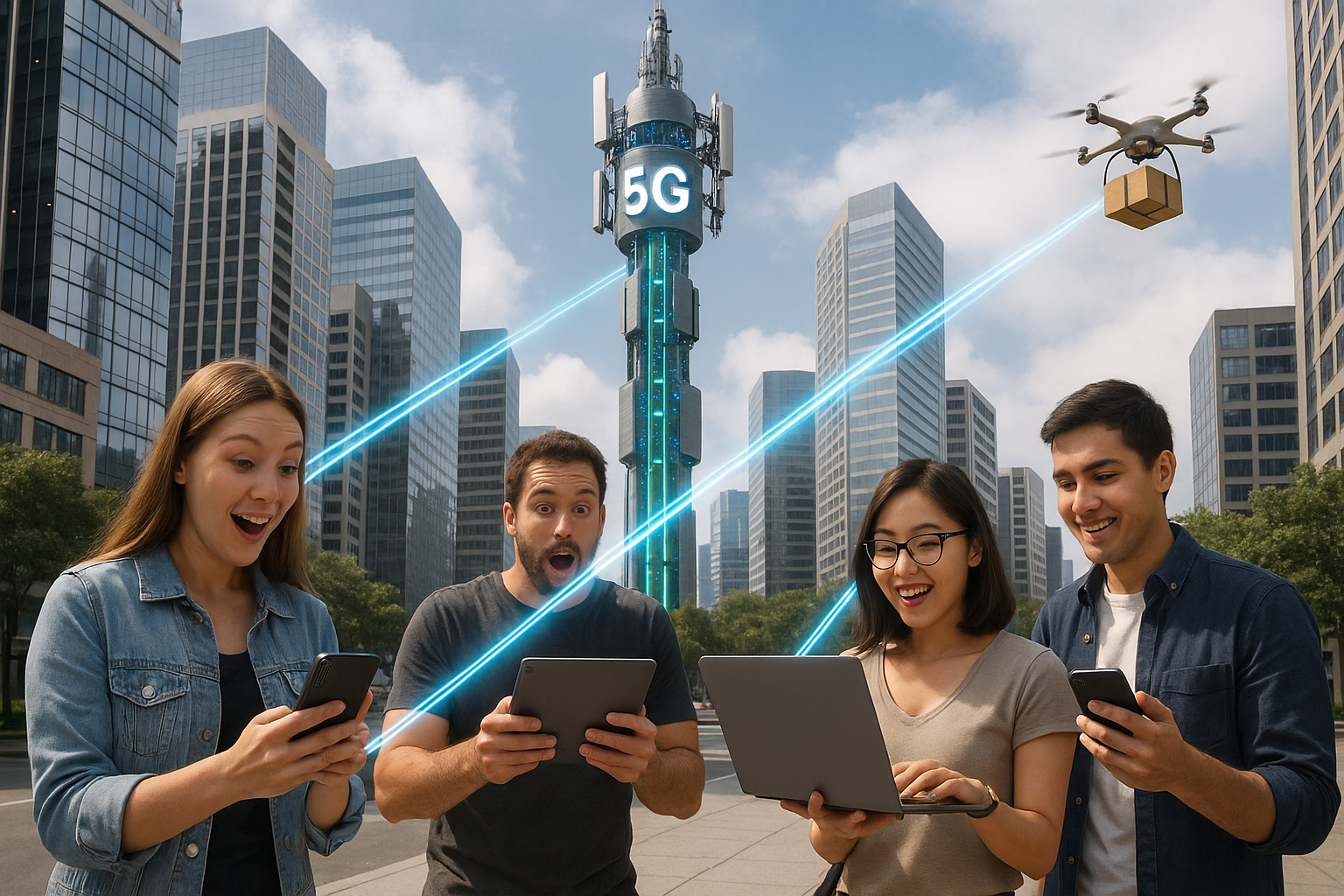
Conclusion
The introduction of 5G technology marks a significant turning point in the realm of telecommunications, promising to revolutionize the way we connect and interact with the digital world. Throughout this article, we have delved into the intricate aspects of 5G’s latency optimization and its potential to deliver lightning-fast speeds, which stand to transform industries and enhance everyday life. 📱
First, we explored the fundamental concept of latency and its critical role in communication networks. Latency, often described as the delay before a transfer of data begins following an instruction for its transfer, is a crucial metric in determining the performance and efficiency of network connections. The lower the latency, the faster the communication. With 5G, latency is reduced to unprecedented levels, allowing for near-instantaneous data transfer, which is essential for applications demanding real-time interaction.
We then examined the technological advancements that make 5G’s low latency possible. Key innovations include the utilization of higher frequency bands, massive MIMO (Multiple Input Multiple Output) technology, and advanced antenna designs. These components work in tandem to enhance data throughput and reduce latency, providing users with a seamless and more responsive network experience.
The discussion further delved into the wide array of applications and industries poised to benefit from 5G’s enhanced connectivity. From autonomous vehicles to smart cities, healthcare to entertainment, the impact of 5G is set to be profound. For instance, in healthcare, the ability to perform remote surgeries with precision becomes feasible thanks to 5G’s real-time data transmission capabilities. In the realm of entertainment, virtual reality and augmented reality experiences become more immersive, offering users unparalleled levels of engagement. 🚗🏙️
Moreover, the article highlighted the societal and economic implications of widespread 5G adoption. By improving connectivity and reducing latency, 5G can drive innovation, increase productivity, and foster economic growth. Businesses can streamline operations, reduce costs, and enhance customer experiences, while individuals can enjoy faster, more reliable access to information and services.
As we conclude our exploration of 5G’s latency optimization, it is essential to reinforce the transformative potential of this technology. The advancements in speed and connectivity not only enhance current applications but also pave the way for innovations we have yet to imagine. However, with these advancements come challenges, including the need for infrastructure development and addressing security concerns, which must be navigated with diligence and foresight.
In closing, we invite you, our readers, to reflect on the implications of 5G technology and consider how it might impact your own lives and industries. Share your thoughts and experiences in the comments section below, and let us know how you envision the future with 5G. Feel free to share this article with your network to spread awareness of this groundbreaking technology. Together, we can harness the power of 5G to create a more connected and efficient world. 🌍
For further reading and to stay updated on the latest developments in 5G technology, we recommend the following resources:
Thank you for joining us on this exploration of 5G and its capacity to revolutionize our connections. The future is fast approaching, and with 5G, it promises to be faster than ever! 🚀
This conclusion encapsulates the essential points from the article, emphasizes the significance of the topic, and encourages reader interaction and engagement. Links to reputable sources are included to provide further exploration on the topic.

Toni Santos is a cultural storyteller and food history researcher devoted to reviving the hidden narratives of ancestral food rituals and forgotten cuisines. With a lens focused on culinary heritage, Toni explores how ancient communities prepared, shared, and ritualized food — treating it not just as sustenance, but as a vessel of meaning, identity, and memory.
Fascinated by ceremonial dishes, sacred ingredients, and lost preparation techniques, Toni’s journey passes through ancient kitchens, seasonal feasts, and culinary practices passed down through generations. Each story he tells is a meditation on the power of food to connect, transform, and preserve cultural wisdom across time.
Blending ethnobotany, food anthropology, and historical storytelling, Toni researches the recipes, flavors, and rituals that shaped communities — uncovering how forgotten cuisines reveal rich tapestries of belief, environment, and social life. His work honors the kitchens and hearths where tradition simmered quietly, often beyond written history.
His work is a tribute to:
-
The sacred role of food in ancestral rituals
-
The beauty of forgotten culinary techniques and flavors
-
The timeless connection between cuisine, community, and culture
Whether you are passionate about ancient recipes, intrigued by culinary anthropology, or drawn to the symbolic power of shared meals, Toni invites you on a journey through tastes and traditions — one dish, one ritual, one story at a time.