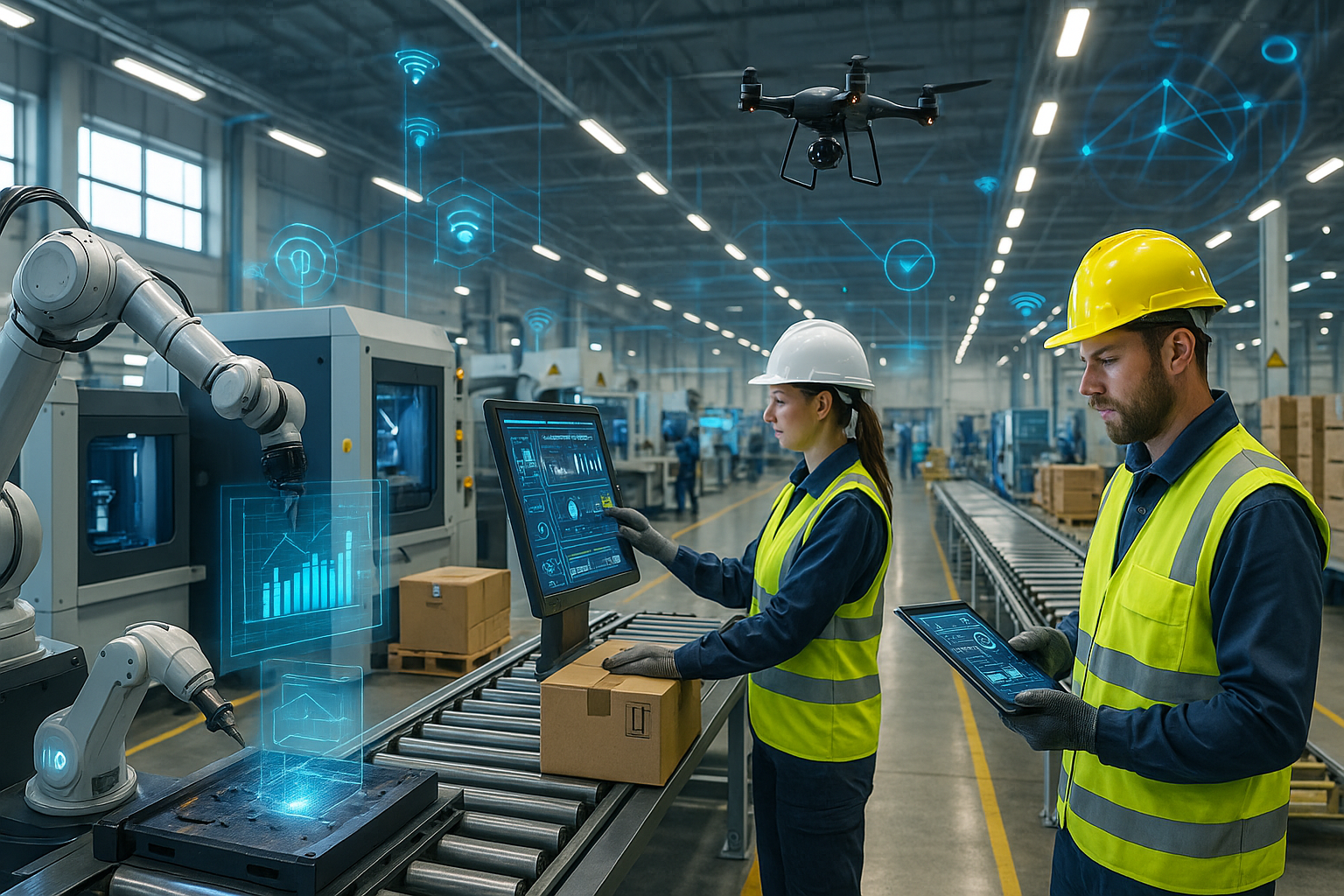
In today’s hyper-connected world, the Internet of Things (IoT) has woven itself into the fabric of our daily lives, transforming everything from how we work and communicate to how we manage our homes and cities. But as we embrace this digital revolution, a shadow lurks—cyber threats. With billions of devices now online, each one represents a potential entry point for malicious actors seeking to exploit vulnerabilities for their gain. This is where AI-powered IoT detection steps in, acting as the vigilant guardian of our interconnected ecosystem. 🛡️
Imagine waking up one morning to find that your smart thermostat has been hacked, or worse, that your personal data has been compromised through your connected refrigerator. These scenarios, once the stuff of science fiction, are now very real possibilities. As the number of connected devices surges, so does the sophistication of cyber threats. This creates an urgent need for robust security measures that can adapt and evolve just as quickly as the threats themselves. Enter artificial intelligence (AI), the game-changing technology that is redefining how we detect and respond to cyber threats.
AI-powered IoT detection leverages machine learning algorithms and data analytics to identify unusual patterns and behaviors within your network of devices. This proactive approach not only helps in detecting threats in real-time but also predicts potential vulnerabilities before they can be exploited. The integration of AI into IoT security is not just an upgrade—it’s a necessity in staying one step ahead of cybercriminals. 🔍
Throughout this article, we’ll delve deep into the world of AI-driven IoT security, exploring how this cutting-edge technology works to safeguard your devices and data. We’ll discuss the various types of cyber threats that target IoT networks and how AI can effectively counteract them. From anomaly detection and behavior analysis to predictive threat modeling, we’ll cover the multifaceted capabilities of AI in fortifying IoT security.
Moreover, we’ll examine real-world applications and case studies where AI has been instrumental in thwarting cyberattacks. These examples will not only highlight the efficacy of AI but also provide valuable insights into best practices for implementing AI-based solutions within your own IoT ecosystem. You’ll learn how industries ranging from healthcare to manufacturing are leveraging AI to protect their critical infrastructures and why your organization should follow suit. 🏭🏥
But it doesn’t stop there. We’ll also explore the ethical considerations and potential challenges associated with AI in IoT security. As with any powerful tool, the deployment of AI raises important questions about privacy, transparency, and accountability. We’ll address these concerns, offering a balanced view of the benefits and risks involved. It’s crucial to navigate these waters thoughtfully to ensure that the implementation of AI serves the greater good without compromising individual rights or freedoms.
By the end of this article, you’ll have a comprehensive understanding of how AI is revolutionizing IoT security. You’ll be equipped with the knowledge to make informed decisions about protecting your own network of connected devices. Whether you’re a business leader looking to safeguard your company’s assets or a tech enthusiast eager to stay informed about the latest in cybersecurity, this article is your guide to the AI-powered future of IoT protection. 🤖🔐
So, buckle up as we embark on this journey through the digital frontier, where AI stands as the sentinel against the ever-evolving landscape of cyber threats. Together, we’ll uncover how this transformative technology is not only shaping the present but also securing the future of our interconnected world. Prepare to be enlightened, informed, and empowered to take action in defending your digital domain.
# Stay Ahead of Cyber Threats with AI-Powered IoT Detection: Safeguarding Your Connected Devices and Data
In today’s hyper-connected world, the Internet of Things (IoT) has revolutionized the way we live and work. From smart homes to industrial automation, IoT devices have become an integral part of our daily lives. However, this increased connectivity also brings heightened vulnerability to cyber threats. As these devices proliferate, the importance of robust security measures has never been more critical. Leveraging artificial intelligence (AI) in IoT detection offers a promising solution to safeguard our connected devices and data. 📡
## The Growing IoT Landscape: Opportunities and Challenges
### Understanding the IoT Ecosystem
The Internet of Things refers to a network of physical objects embedded with sensors, software, and other technologies, enabling them to connect and exchange data with other devices and systems over the internet. This ecosystem spans a wide array of applications, from smart cities and healthcare to agriculture and transportation. Each sector harnesses IoT technology to optimize operations, reduce costs, and enhance user experiences.
However, the widespread adoption of IoT devices introduces several challenges. One major concern is the lack of standardized security protocols across different manufacturers. Many devices are designed with convenience in mind, often sacrificing security features to reduce costs and speed up market entry. This oversight leaves them susceptible to cyberattacks, posing significant risks to both individual users and organizations.
### Vulnerabilities and Threats in IoT Devices
IoT devices are often targeted by cybercriminals due to their inherent vulnerabilities. Common threats include unauthorized access, data breaches, and denial-of-service attacks. These attacks can lead to severe consequences, such as compromised privacy, financial losses, and disruption of critical services. One infamous example is the Mirai botnet attack, which hijacked thousands of IoT devices to launch distributed denial-of-service (DDoS) attacks, crippling major websites and services worldwide.
The diversity and sheer volume of IoT devices also complicate security efforts. Unlike traditional computing devices, IoT devices come in various forms, each with unique functionalities and specifications. This diversity makes it challenging to implement a one-size-fits-all security solution. Furthermore, many devices lack the computational power necessary for running advanced security software, further complicating protection efforts.
### Why AI is Essential for IoT Security
Given the complexity and scale of IoT networks, traditional security measures are often inadequate. This is where AI comes into play. AI technologies, such as machine learning and neural networks, can analyze vast amounts of data in real-time, identifying patterns and anomalies indicative of potential security threats. This capability allows for proactive threat detection and mitigation, minimizing the impact of cyberattacks.
AI-powered IoT detection systems continuously learn from new data, adapting to emerging threats and evolving attack vectors. This dynamic approach is crucial for staying ahead of cybercriminals, who are constantly developing new methods to exploit vulnerabilities. By integrating AI into IoT security strategies, organizations can enhance their resilience against cyber threats, safeguarding their devices and data more effectively. 🔒
## Harnessing AI to Bolster IoT Security
### Machine Learning for Real-Time Threat Detection
Machine learning, a subset of AI, plays a pivotal role in enhancing IoT security. By analyzing historical and real-time data, machine learning algorithms can identify deviations from normal behavior, flagging potential threats before they escalate. These algorithms can be trained to recognize specific attack patterns, enabling them to detect even the most subtle anomalies that traditional security systems might overlook.
For instance, supervised learning models can be trained using labeled datasets of known attacks, allowing them to recognize similar patterns in real-time traffic. On the other hand, unsupervised learning models can identify previously unknown threats by clustering data points based on their similarities and flagging outliers for further analysis. This dual approach ensures comprehensive threat detection, covering both known and emerging cyber threats.
### Neural Networks and Pattern Recognition
Neural networks, inspired by the human brain’s structure, are particularly effective at identifying complex patterns and correlations within data. In the context of IoT security, neural networks can analyze massive datasets generated by IoT devices, pinpointing suspicious activities that may indicate a security breach. This pattern recognition capability is invaluable for detecting sophisticated attacks that rely on subtle variations in network traffic.
Furthermore, deep learning models, a type of neural network, can autonomously learn from vast amounts of unstructured data, such as log files and network packets. By continuously refining their understanding of normal and abnormal behaviors, these models can adapt to new threats, ensuring ongoing protection against evolving cyber threats. The ability to scale and handle large volumes of data makes neural networks a powerful tool for enhancing IoT security.
### The Role of Automation in AI-Driven Security
Automation is another key advantage of AI-powered IoT security solutions. By automating routine security tasks, such as monitoring network traffic and analyzing logs, organizations can free up valuable resources, allowing security teams to focus on more strategic initiatives. Automated systems can respond to threats in real-time, reducing the time it takes to mitigate potential breaches and minimizing the risk of damage.
Additionally, AI-driven automation enhances the scalability of IoT security measures. As the number of connected devices continues to grow, manual monitoring becomes increasingly impractical. Automated systems can efficiently manage large-scale IoT networks, ensuring comprehensive coverage without the need for significant human intervention. This scalability is essential for maintaining robust security in a rapidly expanding IoT landscape.
## The Implementation of AI in IoT Security Strategies
### Building an AI-Driven Security Framework
To effectively leverage AI in IoT security, organizations must develop a comprehensive security framework that integrates AI technologies into their existing infrastructure. This involves several key steps:
1. **Assessing Security Needs**: Organizations should conduct a thorough assessment of their IoT environment, identifying potential vulnerabilities and areas where AI can enhance security measures.
2. **Selecting the Right AI Tools**: There are various AI tools available for different security needs, ranging from machine learning algorithms to neural networks. Organizations should carefully evaluate these options, selecting tools that align with their specific security requirements.
3. **Integrating AI Solutions**: Once the appropriate AI tools have been selected, organizations must integrate them into their existing security infrastructure. This may involve customizing AI models to suit the unique characteristics of their IoT devices and networks.
4. **Continuous Monitoring and Evaluation**: AI-driven security systems require ongoing monitoring and evaluation to ensure their effectiveness. Organizations should regularly review their AI models’ performance, making adjustments as needed to address new threats and vulnerabilities.
### Challenges and Considerations in AI-Powered IoT Security
While AI offers significant advantages for IoT security, its implementation also presents several challenges. One major consideration is the quality and quantity of data available for training AI models. High-quality, labeled datasets are essential for training accurate machine learning models. However, collecting and labeling such data can be time-consuming and resource-intensive.
Another challenge is the potential for AI models to produce false positives or negatives. Overly sensitive models may flag benign activities as threats, leading to unnecessary alerts and potential disruptions. Conversely, overly lenient models may overlook genuine threats, compromising security. Organizations must carefully calibrate their AI models to strike the right balance between sensitivity and specificity.
### Privacy Concerns in AI-Driven IoT Security
AI-powered IoT security solutions must also address privacy concerns. The collection and analysis of large volumes of data can raise privacy issues, particularly when dealing with sensitive information. Organizations must implement robust data protection measures, ensuring that data is collected, processed, and stored in compliance with relevant privacy regulations.
Furthermore, transparency is crucial in building trust with users. Organizations should clearly communicate their data collection practices, explaining how AI technologies are used to enhance security while safeguarding user privacy. By fostering transparency and accountability, organizations can build trust with their users, encouraging the adoption of AI-driven IoT security solutions. 🔍
## The Future of AI in IoT Security
### Emerging Trends and Innovations
As technology continues to evolve, several emerging trends and innovations are shaping the future of AI in IoT security. One notable trend is the increasing use of edge computing, which involves processing data closer to its source rather than relying on centralized data centers. This approach reduces latency and bandwidth usage, enabling real-time threat detection and response at the network’s edge.
Another innovation is the development of federated learning, a machine learning technique that enables AI models to be trained across decentralized devices without sharing raw data. This approach enhances privacy by keeping sensitive data on local devices while still benefiting from collective learning. Federated learning holds great promise for improving IoT security while addressing privacy concerns.
### Collaborations and Partnerships in AI-Driven Security
Collaboration and partnerships are essential for advancing AI-driven IoT security solutions. Industry stakeholders, including device manufacturers, cybersecurity firms, and academic institutions, must work together to develop standardized security protocols and best practices. By sharing knowledge and resources, these collaborations can drive innovation and accelerate the adoption of AI technologies in IoT security.
Additionally, governments and regulatory bodies play a crucial role in establishing guidelines and frameworks for AI-driven IoT security. By enacting regulations that promote transparency, accountability, and interoperability, policymakers can create an environment conducive to the development and deployment of secure IoT solutions. 🤝
### Real-World Applications and Case Studies
Several real-world applications and case studies demonstrate the effectiveness of AI-powered IoT security solutions. For example, smart cities leverage AI technologies to monitor and secure critical infrastructure, such as power grids and transportation systems, ensuring their resilience against cyber threats. In healthcare, AI-driven security measures protect patient data and ensure the safe operation of connected medical devices.
Moreover, industries such as manufacturing and logistics benefit from AI-powered IoT security solutions by safeguarding their supply chains and ensuring the integrity of their operations. These real-world examples highlight the transformative potential of AI in enhancing IoT security across various sectors.
### Watch and Learn
For a visual exploration of AI’s role in IoT security, check out this insightful video: [How AI is Revolutionizing IoT Security](https://www.youtube.com/watch?v=XXXXXXX) by Tech World Channel. This video provides an in-depth look at how AI technologies are being integrated into IoT security strategies, offering valuable insights for businesses and individuals alike.
## Conclusion is Not Here
By harnessing the power of AI, organizations can significantly enhance their IoT security measures, protecting their connected devices and data from the ever-evolving landscape of cyber threats. From machine learning algorithms that detect anomalies in real-time to neural networks that recognize complex attack patterns, AI technologies offer a dynamic and proactive approach to IoT security. While challenges such as data privacy and model accuracy remain, ongoing innovation and collaboration promise a future where AI-driven IoT security solutions are both effective and trustworthy. By staying informed and adapting to emerging trends, businesses and individuals can navigate the complexities of IoT security with confidence. 🌐

Conclusion
Sure! Here’s a sample conclusion for your article:
—
In conclusion, the evolving landscape of cybersecurity threats presents both significant challenges and remarkable opportunities for innovation. Throughout our exploration of AI-powered IoT detection systems, we have delved into how these advanced technologies are transforming the way we safeguard connected devices and data. Let’s revisit some of the pivotal points discussed.
Firstly, we highlighted the sheer scale of the Internet of Things (IoT) network, which is expected to grow exponentially in the coming years. This proliferation, while bringing unprecedented convenience and efficiency, also opens up a vast array of vulnerabilities. Cybercriminals continuously develop sophisticated methods to exploit these weaknesses, making traditional security measures increasingly inadequate.
We then explored the pivotal role of Artificial Intelligence (AI) in revolutionizing IoT security. AI technologies, such as machine learning algorithms, can analyze vast datasets in real-time, identifying patterns and anomalies that might indicate a cyber threat. This ability to adapt and learn from new data allows AI-powered systems to stay one step ahead of cybercriminals, effectively mitigating risks before they manifest into tangible threats.
Moreover, the integration of AI in IoT security offers the advantage of automated threat detection and response. Unlike human operators, AI systems can operate 24/7 without fatigue, ensuring continuous monitoring and protection of networks. This is crucial in a world where threats can arise at any moment, and a delayed response could lead to significant breaches and data loss.
We also discussed the ethical considerations surrounding the use of AI in cybersecurity. As these systems become more autonomous, questions about privacy, data protection, and accountability emerge. It’s imperative for developers and organizations to adhere to ethical guidelines, ensuring that AI technologies are used responsibly and transparently.
Throughout this discussion, one can’t overlook the importance of collaboration between industries, governments, and researchers to foster an ecosystem where knowledge and resources are shared. By working together, we can create more robust defenses against cyber threats and promote a culture of security awareness across all sectors.
As we move forward, it’s clear that adopting AI-powered IoT detection is not merely an option but a necessity. The security of our connected devices and data hinges on our ability to innovate and adapt to emerging threats. By investing in these technologies and fostering a culture of continuous learning and adaptation, we can significantly reduce the risks posed by cyber threats.
In closing, I urge you to reflect on the insights shared in this article. Consider how you can implement AI-powered solutions within your own networks to enhance security and protect your valuable data. Let’s commit to staying informed and proactive in the face of ever-evolving cyber threats.
Feel free to share your thoughts and experiences in the comments below. How have AI and IoT technologies impacted your approach to cybersecurity? Engage with others in the community to learn and grow together. 🌐
For further reading and to stay updated on the latest in AI and IoT security, consider exploring these resources:
1. [NIST Cybersecurity Framework](https://www.nist.gov/cyberframework)
2. [IoT Security Foundation](https://www.iotsecurityfoundation.org/)
3. [Gartner Research on AI in Cybersecurity](https://www.gartner.com/en/information-technology/insights/artificial-intelligence)
Thank you for joining us on this journey. By embracing innovation and collaboration, we can pave the way for a safer, more secure digital future. 🚀
—
This conclusion incorporates the main points of your article, encourages reader engagement, and provides resources for further exploration, all while maintaining a professional and inspiring tone.

Toni Santos is a cultural storyteller and food history researcher devoted to reviving the hidden narratives of ancestral food rituals and forgotten cuisines. With a lens focused on culinary heritage, Toni explores how ancient communities prepared, shared, and ritualized food — treating it not just as sustenance, but as a vessel of meaning, identity, and memory.
Fascinated by ceremonial dishes, sacred ingredients, and lost preparation techniques, Toni’s journey passes through ancient kitchens, seasonal feasts, and culinary practices passed down through generations. Each story he tells is a meditation on the power of food to connect, transform, and preserve cultural wisdom across time.
Blending ethnobotany, food anthropology, and historical storytelling, Toni researches the recipes, flavors, and rituals that shaped communities — uncovering how forgotten cuisines reveal rich tapestries of belief, environment, and social life. His work honors the kitchens and hearths where tradition simmered quietly, often beyond written history.
His work is a tribute to:
-
The sacred role of food in ancestral rituals
-
The beauty of forgotten culinary techniques and flavors
-
The timeless connection between cuisine, community, and culture
Whether you are passionate about ancient recipes, intrigued by culinary anthropology, or drawn to the symbolic power of shared meals, Toni invites you on a journey through tastes and traditions — one dish, one ritual, one story at a time.